
Table of Contents
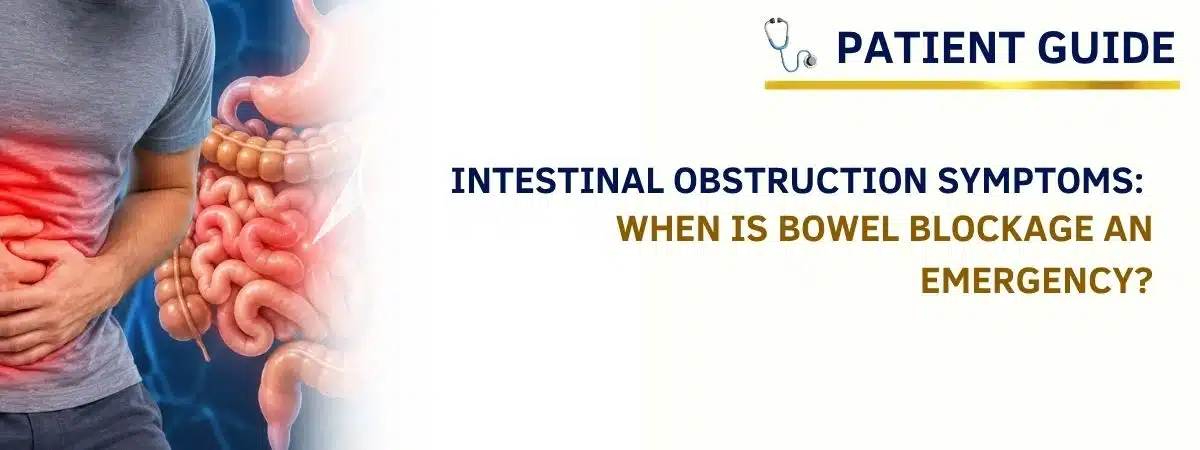
Abdominal pain, bloating, constipation, or vomiting can sometimes be caused by minor digestive problems. However, when these symptoms occur together—especially when a person cannot pass stool or gas—they may indicate an intestinal obstruction.
An intestinal obstruction occurs when food, fluids, digestive contents, or gas cannot move normally through the intestine. It may be partial or complete and can develop suddenly or gradually. Some cases can be managed with hospital-based non-surgical treatment, while others require urgent surgery.
Recognising intestinal obstruction symptoms early is important because a severe blockage can affect the blood supply to the intestine and may lead to bowel damage or perforation. This article explains common bowel obstruction symptoms, causes, warning signs, diagnosis, treatment, recovery, and when intestinal obstruction surgery in Solapur may be required.
Important: Severe or worsening abdominal pain, repeated vomiting, significant abdominal swelling, or inability to pass stool and gas requires prompt medical assessment. Do not attempt to diagnose or treat suspected bowel obstruction at home.
For additional information, read Emergency Abdominal Pain: 10 Warning Signs You Should Never Ignore.
What Is an Intestinal Obstruction?
An intestinal obstruction is a blockage that prevents intestinal contents from moving normally. It can affect the:
- Small intestine
- Large intestine, also called the colon
The blockage may be partial, allowing some contents to pass, or complete, preventing normal passage.
Mechanical Obstruction
A physical problem blocks the intestine. Possible causes include:
- Scar tissue from previous abdominal surgery
- Hernia
- Tumour
- Twisting of the intestine
- Narrowing of the intestine
- Impacted stool in selected situations
Functional Obstruction
There is no physical blockage, but intestinal movement becomes severely reduced, so contents do not move normally. The type and cause of obstruction are important because treatment depends on the underlying problem. Dr. Vijay Shivpuje provides care for gastrointestinal and intestinal conditions through Gastrointestinal (GI) Surgery services in Solapur.
What Are the Main Intestinal Obstruction Symptoms?
Common intestinal obstruction symptoms include:
- Cramping abdominal pain
- Abdominal swelling or distension
- Nausea
- Vomiting
- Constipation
- Difficulty passing stool
- Inability to pass gas
- Loss of appetite
- Dehydration
- Weakness
Cramping or Colicky Abdominal Pain
Abdominal pain is one of the most common bowel obstruction symptoms. It may come in waves as the intestine attempts to push contents past the blockage and can become persistent as the obstruction progresses.
Pain is especially concerning when severe or worsening, or when it occurs with vomiting, swelling, fever, or significant weakness.
Abdominal Swelling and Distension
When intestinal contents and gas cannot move normally, they can accumulate above the obstruction. The abdomen may feel bloated, tight, full, or uncomfortable. Significant swelling combined with vomiting and inability to pass gas or stool requires urgent medical assessment.
Nausea and Vomiting
Vomiting is another important symptom. An obstruction higher in the small intestine may cause vomiting relatively early.
Repeated vomiting can result in:
- Dehydration
- Electrolyte loss
- Weakness
- Low blood pressure in severe cases
Constipation and Inability to Pass Gas
Constipation alone does not necessarily mean bowel obstruction. Concern increases when constipation occurs together with:
- Increasing abdominal pain
- Abdominal swelling
- Vomiting
- Inability to pass gas
A complete obstruction can eventually prevent both stool and gas from passing.
Loss of Appetite, Dehydration and Weakness
Loss of appetite may occur when intestinal contents are not moving normally. Repeated vomiting and difficulty drinking can cause dehydration, with signs such as dry mouth, excessive thirst, reduced urine output, dizziness, weakness, or feeling faint.
What Causes an Intestinal Obstruction?
Adhesions After Abdominal Surgery
Adhesions are bands of scar tissue that may form inside the abdomen after surgery or inflammation. They can sometimes trap or kink the intestine and cause obstruction, even years after surgery.
Hernia and Bowel Obstruction
A hernia occurs when internal tissue pushes through a weak area of the abdominal wall. Sometimes part of the intestine becomes trapped, potentially causing obstruction and affecting its blood supply.
Patients with a known hernia should seek medical assessment if they develop:
- Sudden severe pain
- Painful swelling that does not go back in
- Vomiting
- Abdominal distension
- Inability to pass stool or gas
Learn more about Hernia Surgery in Solapur.
For selected patients, minimally invasive approaches may be considered. See Advanced Laparoscopic Hernia Repair in Solapur.
Tumours and Narrowing of the Intestine
A growth, inflammation, or scarring can narrow the intestinal passage. Persistent changes in bowel habits, unexplained weight loss, blood in stool, recurrent abdominal symptoms, or progressive constipation should be medically evaluated.
For conditions involving the colon and rectum, see Colorectal Surgery in Solapur.
Intestinal Twisting
In some cases, the intestine can twist around itself, causing obstruction and potentially affecting its blood supply.
Symptoms may include:
- Sudden or severe abdominal pain
- Significant abdominal swelling
- Vomiting
- Constipation
- Inability to pass gas
Can Previous Surgery Cause Bowel Obstruction?
Yes. Previous abdominal or pelvic surgery can cause internal scar tissue called adhesions, which may interfere with bowel movement. If someone with a surgical history develops unexplained abdominal pain, vomiting, bloating, or inability to pass gas, the history should be reported to the doctor.
When Is Bowel Blockage an Emergency?
Seek emergency medical care if you develop:
- Severe or rapidly worsening abdominal pain
- Repeated vomiting
- Marked abdominal swelling
- Inability to pass stool and gas
- Fever with abdominal symptoms
- Severe weakness or fainting
- A painful, irreducible hernia swelling
- Blood in vomit or stool
- Signs of dehydration
- Increasing abdominal tenderness
For urgent surgical evaluation, see Emergency Abdominal Surgery services in Solapur.
Why Can Intestinal Obstruction Become Dangerous?
A significant obstruction can cause the intestine to become increasingly swollen. In some cases, the blood supply to part of the bowel may become compromised.
Potential complications include:
- Bowel ischemia
- Tissue damage
- Perforation
- Peritonitis
- Severe infection
- Sepsis
How Is Intestinal Obstruction Diagnosed?
Doctors generally use a combination of:
- Medical history
- Physical examination
- Blood tests
- Imaging studies
The doctor may ask about previous surgery, hernias, prior obstruction, bowel habits, vomiting, pain patterns, medications, and gastrointestinal conditions.
Physical Examination
The abdomen may be checked for:
- Swelling
- Tenderness
- Localised pain
- Guarding or rigidity
- Hernias
- Other signs of abdominal disease
Blood Tests
Blood tests can assess infection, inflammation, dehydration, electrolyte abnormalities, kidney function, and illness severity.
Imaging Tests
An abdominal X-ray can sometimes show patterns suggestive of bowel obstruction. A CT scan can provide more detailed information about:
- Location of the obstruction
- Cause of the blockage
- Severity
- Bowel-wall changes
- Perforation
- Abscess
- Other complications
Can an Intestinal Obstruction Be Treated Without Surgery?
Yes, some intestinal obstructions can initially be managed without surgery, depending on their cause and severity. Selected obstructions, including some caused by adhesions, may sometimes improve with hospital-based conservative management.
Treatment can include:
- Bowel rest
- Intravenous fluids
- Correction of electrolyte abnormalities
- Monitoring
- Nasogastric tube in appropriate patients
- Treatment of the underlying cause
If the obstruction does not improve or complications develop, surgery may be required.
When Is Intestinal Obstruction Surgery Needed?
Surgery may be necessary when:
- The obstruction does not resolve
- There is evidence of bowel ischemia
- The intestine has perforated
- There is a strangulated hernia
- A mechanical cause requires correction
- There is a tumour or structural blockage
- The patient’s condition is deteriorating
Patients who require operative treatment may undergo Intestinal Obstruction Surgery in Solapur.
Can Laparoscopic Surgery Be Used?
In selected patients, minimally invasive surgery may be possible. Laparoscopic surgery uses small incisions and a camera and may offer smaller incisions and potentially faster recovery in appropriate cases.
Learn more about Laparoscopic Keyhole Surgery in Solapur.
What Is a Colostomy?
A colostomy creates an opening of the colon through the abdominal wall so stool can leave the body into a specialised bag. A colostomy may be temporary or permanent, depending on the underlying condition and surgical circumstances.
Dr. Vijay Shivpuje also provides services related to Colostomy Care, Reversal and Surgery in Solapur.
Warning Signs After Discharge
Seek medical advice if you develop:
- Increasing abdominal pain
- Persistent vomiting
- Increasing abdominal swelling
- Fever
- Wound redness or discharge
- Difficulty eating or drinking
- Severe weakness
- New inability to pass stool or gas
Intestinal Obstruction vs Constipation
Constipation usually means bowel movements are less frequent or stools are difficult to pass. Intestinal obstruction is more serious and involves impaired passage through the intestine.
Constipation may involve:
- Hard stools
- Straining
- Infrequent bowel movements
- Abdominal discomfort
Obstruction may involve:
- Cramping or severe abdominal pain
- Significant bloating
- Vomiting
- Inability to pass gas
- Inability to pass stool
Because symptoms can overlap, severe or unusual symptoms should be medically evaluated rather than self-diagnosed.
Intestinal Obstruction vs Gas
Gas can cause bloating and abdominal discomfort. However, persistent or worsening pain with repeated vomiting, increasing swelling, or inability to pass gas or stool may indicate a more serious problem.
Do not assume significant distension and vomiting are simply “gas.” See Gallstones vs Gas Pain: How to Tell the Difference for another discussion of abdominal symptoms that can be confused with gas.
What Should You Do If You Suspect a Bowel Obstruction?
If you develop symptoms suggestive of intestinal obstruction—particularly severe pain, repeated vomiting, significant swelling, or inability to pass stool and gas—do not wait for the symptoms to become unbearable.
Seek medical assessment promptly. Avoid repeated doses of laxatives or home remedies for suspected obstruction without medical advice. Patients with severe symptoms should seek emergency care rather than waiting for a routine appointment.
Intestinal Obstruction Surgery in Solapur
Patients searching for intestinal obstruction surgery in Solapur may want to know whether surgery is necessary, how the blockage is diagnosed, how urgent treatment is, whether bowel removal or a colostomy may be needed, and how recovery works.
These decisions cannot be made from symptoms alone.
Dr. Vijay Shivpuje is a Consultant Surgeon & Chief of Surgical Services at Yashodhara Super Speciality Hospital, Solapur, with more than 25 years of surgical experience. His practice includes gastrointestinal surgery, intestinal surgery, emergency general surgery, trauma surgery, laparoscopic surgery, and management of complex abdominal conditions.
For a non-emergency consultation, you can book an appointment with Dr. Vijay Shivpuje.
Final Conclusion
Intestinal obstruction symptoms should never be ignored when they are severe, persistent, or progressively worsening. Abdominal pain with vomiting, significant swelling, constipation, or inability to pass gas can indicate a bowel blockage. Some cases improve with hospital-based treatment, while others require urgent surgery.
Because severity cannot be determined reliably at home, medical examination, blood tests, and imaging may be needed. If severe pain, repeated vomiting, marked swelling, or inability to pass stool and gas occurs, seek prompt medical evaluation.
For intestinal obstruction surgery in Solapur, Dr. Vijay Shivpuje, Consultant Surgeon & Chief of Surgical Services at Yashodhara Super Speciality Hospital, Solapur, provides surgical evaluation and management of intestinal and other abdominal conditions.
For a planned consultation, you can book an appointment with Dr. Vijay Shivpuje.
Appointment: +91 94220 69801
FAQs
1. What are the most common intestinal obstruction symptoms?
Common symptoms include cramping abdominal pain, swelling, nausea, vomiting, constipation, and inability to pass gas or stool.
2. What are the warning signs of bowel obstruction?
Severe or worsening pain, repeated vomiting, significant distension, and inability to pass stool or gas require prompt medical evaluation.
3. Can a bowel obstruction go away on its own?
Some partial obstructions may resolve with hospital-based non-surgical treatment, but this must be determined and monitored by a medical team.
4. Can constipation cause a bowel obstruction?
Severe constipation can sometimes contribute to intestinal blockage, but ordinary constipation and obstruction are not the same. Vomiting, severe pain, swelling, and inability to pass gas require medical assessment.
5. Can gas cause symptoms similar to bowel obstruction?
Gas can cause bloating and discomfort, but persistent pain with vomiting, severe swelling, and inability to pass stool or gas may indicate a more serious problem.
