
Table of Contents
Abdominal discomfort is one of the most common reasons people visit a doctor. However, distinguishing between ordinary gas pain and gallbladder-related pain is not always easy.
Many people dismiss their symptoms as acidity, indigestion, or excessive gas. In some cases, this assumption is correct. In others, the pain may be caused by gallstones and require prompt medical attention.
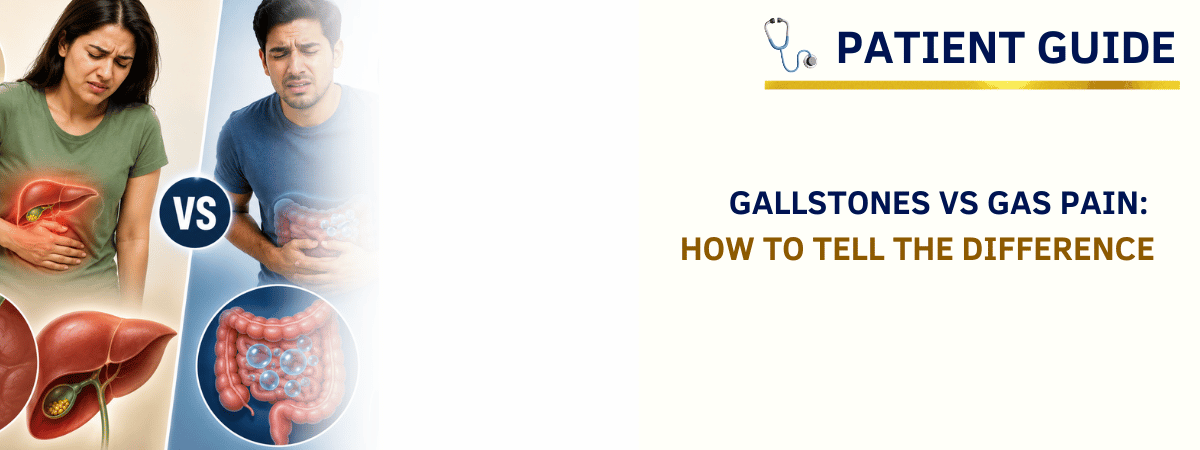
Understanding the difference between gallstones vs gas pain can help you seek timely treatment and avoid complications.
In this article, Dr. Vijay Shivpuje, Consultant Surgeon and Chief of Surgical Services at Yashodhara Super Speciality Hospital, Solapur, explains the most common gallbladder pain symptoms, the causes of gallstones, available treatment options, and when you should consider gallbladder surgery in Solapur.
What Are Gallstones?
Gallstones are hardened deposits that form inside the gallbladder, a small organ located beneath the liver.
The gallbladder stores bile, a digestive fluid that helps break down fats.
Gallstones may vary greatly in size. Some are as small as grains of sand, while others may become much larger.
Many individuals have gallstones without experiencing any symptoms. Others may develop pain and digestive problems that interfere with daily life.
Types of Gallstones
There are two main types of gallstones.
Cholesterol stones
These are the most common type and develop when bile contains excessive cholesterol.
Pigment stones
These stones contain higher levels of bilirubin, a substance produced when red blood cells break down.
What Is Gas Pain?
Gas pain occurs when excessive air accumulates within the digestive tract.
This problem is often associated with:
- Swallowing air while eating
- Indigestion
- Constipation
- Carbonated beverages
- Certain foods
- Digestive disorders
Gas pain is generally temporary and often improves after passing gas or having a bowel movement.
However, persistent symptoms should never be ignored.
Gallstones vs Gas Pain: Understanding the Difference
Although both conditions affect the digestive system, there are several important differences.
| Feature | Gallstones | Gas Pain |
| Location of pain | Upper right side of the abdomen | Any part of the abdomen |
| Duration | Minutes to several hours | Usually shorter |
| Trigger factors | Fatty meals | Gas-producing foods |
| Associated symptoms | Nausea, vomiting, fever | Bloating and burping |
| Severity | Often moderate to severe | Usually mild to moderate |
| Need for surgery | Possible | Rare |
Location of Gallstone Pain
One of the most important clues is the location of the pain.
Pain caused by gallstones typically develops in the:
- Upper right side of the abdomen
- Centre of the upper abdomen
- Right shoulder
- Upper back
Many patients describe the discomfort as a sharp, intense, or cramping pain.
Location of Gas Pain
Gas-related discomfort usually feels different.
Patients commonly describe:
- Abdominal bloating
- Pressure
- Cramping
- Intermittent discomfort
- A sensation of fullness
Unlike gallstone pain, gas pain often shifts from one location to another.
Common Gallbladder Pain Symptoms
Recognising gallbladder pain symptoms can help patients seek treatment before complications develop.
Common symptoms include:
- Severe abdominal pain
- Nausea
- Vomiting
- Indigestion
- Abdominal bloating
- Fever
- Chills
- Loss of appetite
Some individuals notice symptoms after consuming fried or oily foods.
Symptoms That Require Immediate Medical Attention
Seek urgent medical care if you experience:
- Severe pain lasting several hours
- Persistent vomiting
- Fever
- Yellow discoloration of the skin or eyes
- Dark urine
- Pale-coloured stools
These symptoms may indicate a more serious condition requiring prompt treatment.
You may also find the following article helpful:
Emergency Abdominal Pain: 10 Warning Signs You Should Never Ignore
What Causes Gallstones?
Several factors increase the risk of gallstone formation.
Lifestyle-related factors
- Obesity
- Physical inactivity
- High-fat diets
- Smoking
- Rapid weight loss
Medical risk factors
- Diabetes
- Liver disease
- Pregnancy
- Hormonal changes
- Family history of gallstones
Age-related factors
The risk of developing gallstones generally increases with age.
Foods That May Trigger Gallstone Pain
Certain foods are more likely to trigger symptoms.
These include:
- Fried foods
- Fast food
- Processed foods
- High-fat dairy products
- Red meat
- Sugary foods
Many patients notice discomfort shortly after eating these foods.
Foods That May Contribute to Gas Formation
Gas-producing foods include:
- Beans
- Lentils
- Carbonated drinks
- Cabbage
- Broccoli
- Onions
Every individual reacts differently, and symptoms may vary considerably.
How Doctors Differentiate Between Gallstones and Gas Pain
Doctors evaluate several factors during the consultation, including:
- The location of pain
- Symptom duration
- Eating habits
- Medical history
- Family history
- Associated symptoms
The pattern of symptoms often provides valuable clues.
Can Gallstones Be Mistaken for Other Conditions?
Yes. Gallstones can sometimes resemble:
- Gastritis
- Acid reflux disease
- Peptic ulcers
- Pancreatitis
- Appendicitis
- Liver disorders
This is one reason why professional medical evaluation is important.
Specialists in gastrointestinal (GI) surgery in Solapur carefully assess symptoms before determining the most appropriate course of treatment.
Why Early Diagnosis Is Important
Early diagnosis may help:
- Prevent complications
- Relieve symptoms
- Improve quality of life
- Reduce the risk of emergency surgery
- Allow timely intervention
Modern laparoscopic procedures have transformed gallbladder treatment and improved recovery for many patients.
Related service:
Gallbladder Stone Surgery in Solapur
When Should You Consult a Doctor?
Many people assume that abdominal discomfort is caused by indigestion or excess gas. While this is often true, persistent or severe symptoms should never be ignored.
You should seek medical advice if you experience:
- Frequent abdominal pain
- Pain after consuming fatty foods
- Persistent nausea
- Vomiting
- Fever
- Abdominal swelling
- Loss of appetite
- Unexplained weight loss
Early evaluation allows doctors to identify the underlying cause and recommend the most appropriate treatment.
Warning Signs You Should Never Ignore
Certain symptoms may indicate a serious medical problem that requires immediate attention.
Seek urgent medical care if you experience:
- Severe abdominal pain lasting several hours
- High fever
- Persistent vomiting
- Yellowing of the eyes or skin (jaundice)
- Dark-coloured urine
- Pale stools
- Difficulty breathing
- Extreme weakness
These symptoms may indicate:
- Gallbladder inflammation
- Bile duct obstruction
- Pancreatitis
- Infection
- Internal bleeding
You can read more about these warning signs here:
Emergency Abdominal Pain: 10 Warning Signs You Should Never Ignore
How Are Gallstones Diagnosed?
A detailed medical evaluation is the first step in identifying the cause of abdominal pain.
Your surgeon may ask questions regarding:
- The location of pain
- Eating habits
- Previous illnesses
- Family history
- The duration of symptoms
A physical examination is usually followed by diagnostic investigations.
Blood Tests
Blood tests help identify:
- Infection
- Liver problems
- Inflammation
- Pancreatic disorders
Ultrasound Examination
Ultrasound scanning is one of the most commonly used investigations for diagnosing gallstones.
It helps doctors evaluate:
- Stone size
- Gallbladder inflammation
- Bile duct obstruction
CT Scan
Computed tomography (CT) scans provide more detailed images of internal organs.
These scans are particularly useful in complicated cases.
Endoscopic Evaluation
Some patients may require additional investigations.
Specialists may recommend:
- Upper gastrointestinal endoscopy
- Colonoscopy
You can learn more about these procedures here:
Diagnostic Upper GI Endoscopy in Solapur
You may also find this article useful:
What Happens If Gallstones Are Left Untreated?
Not every patient with gallstones experiences symptoms. However, symptomatic gallstones can occasionally lead to complications.
Possible complications include:
- Gallbladder inflammation
- Infection
- Pancreatitis
- Blockage of bile ducts
- Severe abdominal pain
- Jaundice
Prompt treatment may help reduce these risks.
Treatment Options for Gallstones
Treatment depends on several factors, including:
- Symptom severity
- Stone size
- Stone location
- The patient’s overall health
- The presence of complications
Lifestyle Modifications
Some patients benefit from lifestyle changes such as:
- Reducing fatty food intake
- Maintaining a healthy weight
- Exercising regularly
- Drinking sufficient water
- Avoiding smoking
Although these changes may reduce symptoms, they may not eliminate existing gallstones.
Medications
Doctors occasionally prescribe medications in selected cases.
However, medicines are not suitable for every patient and generally work more slowly than surgical treatment.
Surgical Treatment
Surgery is often recommended when symptoms persist or complications develop.
What Is Gallbladder Surgery?
Gallbladder surgery (cholecystectomy) involves removing the gallbladder.
Fortunately, people can live healthy lives without a gallbladder because bile continues to flow directly from the liver into the intestine.
Laparoscopic Gallbladder Surgery
Modern gallbladder surgery is commonly performed using minimally invasive techniques.
The surgeon makes several small incisions and inserts specialised instruments to remove the gallbladder.
Potential benefits include:
- Smaller scars
- Reduced discomfort
- Faster recovery
- Earlier return to work
- Shorter hospital stay
Learn more here:
Gallbladder Stone Surgery in Solapur
Why Laparoscopic Surgery Is Preferred
Laparoscopic surgery has become one of the most frequently performed procedures worldwide.
It offers several advantages over conventional surgery.
Patients often experience:
- Less postoperative discomfort
- Faster healing
- Reduced scarring
- Lower risk of complications
- Improved mobility
You can read more about these techniques here:
Laparoscopic (Keyhole) Surgery in Solapur
Recovery After Gallbladder Surgery
Recovery time varies from one person to another.
Several factors influence the healing process, including:
- Age
- Existing medical conditions
- Surgical technique
- Lifestyle habits
During the First Few Days
Patients are generally advised to:
- Rest adequately.
- Walk regularly.
- Drink plenty of fluids.
- Follow dietary instructions.
- Take medicines as prescribed.
During the Following Weeks
Recovery recommendations usually include:
- Avoiding heavy lifting
- Eating balanced meals
- Maintaining a healthy weight
- Attending follow-up visits
Can Gallstones Be Prevented?
Although prevention is not always possible, healthy lifestyle choices may help reduce the risk.
Helpful recommendations include:
- Maintaining a healthy weight
- Following a balanced diet
- Exercising regularly
- Avoiding smoking
- Drinking sufficient water
- Managing diabetes effectively
When Should You Consult Dr. Vijay Shivpuje?
You should schedule a consultation if you notice:
- Recurrent abdominal pain
- Nausea and vomiting
- Pain after eating fatty foods
- Bloating
- Fever
- Persistent digestive symptoms
Early diagnosis often leads to more effective treatment and a quicker recovery.
If you are experiencing gallbladder pain symptoms or are looking for gallbladder surgery in Solapur, consult Dr. Vijay Shivpuje, Consultant Surgeon and Chief of Surgical Services at Yashodhara Super Speciality Hospital, Solapur.
Book an appointment: Book Now
Conclusion
Understanding the difference between gallstones vs gas pain is important because these conditions often produce similar symptoms. While gas pain is usually temporary, gallstones may lead to serious complications if left untreated.
Recognizing gallbladder pain symptoms early allows patients to seek medical attention before complications develop. Prompt diagnosis can help determine whether lifestyle modifications, medication, or surgery is the most appropriate option.
Modern minimally invasive procedures have significantly improved recovery times and treatment outcomes for many patients requiring gallbladder surgery in Solapur.
If you experience persistent abdominal discomfort, nausea, bloating, or pain after eating fatty foods, do not ignore these symptoms.
Consult Dr. Vijay Shivpuje, Consultant Surgeon and Chief of Surgical Services at Yashodhara Super Speciality Hospital, Solapur, for expert evaluation and treatment.
Book an appointment: Book Now
FAQs
1. How can I tell the difference between gallstones and gas pain?
Ans: The main difference is the location, intensity, and duration of the pain. Gallstone pain usually occurs in the upper right side of the abdomen and may last for several hours, while gas pain can occur anywhere in the abdomen and often improves after passing gas.
2. What are the most common gallbladder pain symptoms?
Ans: The most common symptoms include:
● Pain in the upper right abdomen
● Nausea
● Vomiting
● Indigestion
● Bloating
● Fever
● Pain that spreads to the back or shoulder
3. Can gallstones disappear naturally?
Ans: In most cases, gallstones do not disappear on their own. Some patients may not experience symptoms, while others may require medical treatment or surgery.
4. Can gas pain mimic gallstone pain?
Ans: Yes. Many patients initially believe that their symptoms are caused by indigestion or excess gas. This is why persistent or severe abdominal pain should always be evaluated by a doctor.
5. Which foods trigger gallstone attacks?
Ans: Certain foods may increase the likelihood of symptoms, including:
● Fried foods
● High-fat dairy products
● Processed foods
● Red meat
● Fast food
● Sugary foods

Pingback: Intestinal Obstruction Symptoms: Signs & Emergency Care