
Table of Contents
Hearing that you have a hernia can be worrying. One of the first questions many people ask is, “Can a hernia heal without surgery?”
Unfortunately, many people delay treatment because they hope the condition will improve on its own. Others search for home remedies, exercise plans, abdominal belts, or dietary changes that might eliminate the problem.
The truth is that the answer depends on the type of hernia, its size, the symptoms you are experiencing, and your overall health.
In this article, we explain everything you need to know about hernias, including common hernia symptoms, treatment options, warning signs that require urgent medical attention, and when you should consider hernia surgery in Solapur.
Dr. Vijay Shivpuje, Consultant Surgeon and Chief of Surgical Services at Yashodhara Super Speciality Hospital, Solapur, has more than 25 years of experience in managing a wide range of abdominal wall disorders and performing advanced laparoscopic procedures.
What Is a Hernia?
A hernia occurs when an internal organ or a portion of tissue pushes through a weak area in the surrounding muscle or connective tissue.
In many cases, patients notice a swelling or lump that becomes more obvious while:
- Standing
- Coughing
- Sneezing
- Laughing
- Lifting heavy objects
- Straining during bowel movements
A hernia can develop gradually over time or appear suddenly after physical strain.
Some hernias cause only mild discomfort, while others may become medical emergencies requiring immediate treatment.
You can learn more about specialized hernia surgery in Solapur here:
Can a Hernia Heal Without Surgery?
This is the question that almost every patient asks.
The short answer is no.
In most cases, a hernia does not disappear on its own because the weakened muscle or tissue does not naturally regain its original strength.
Unlike a minor muscle strain, a hernia involves an actual defect or opening in the abdominal wall.
Although certain lifestyle changes may help reduce symptoms, they usually do not repair the underlying problem.
These measures may include:
- Avoiding heavy lifting
- Maintaining a healthy weight
- Eating a fibre-rich diet
- Preventing constipation
- Quitting smoking
- Managing chronic coughing
However, these strategies help control symptoms rather than cure the condition.
Why Doesn’t a Hernia Heal Naturally?
The abdominal wall is designed to hold internal organs securely in place.
When a weak spot develops, pressure from within the abdomen may force tissue through the opening.
This weakness generally remains unless it is repaired.
Several factors contribute to this process:
- Age-related muscle weakness
- Obesity
- Pregnancy
- Chronic coughing
- Heavy lifting
- Previous surgery
- Persistent constipation
- Smoking
Without treatment, some hernias gradually increase in size and may eventually lead to complications.
Types of Hernias
Understanding the different types of hernias helps patients recognize symptoms early and seek timely medical attention.
1. Inguinal Hernia
An inguinal hernia develops in the groin region and is one of the most common types of hernia.
Common symptoms include:
- Groin swelling
- Pain while coughing
- A heavy sensation in the lower abdomen
- Burning discomfort
- Increased pain after physical activity
2. Umbilical Hernia
An umbilical hernia develops near the belly button.
It may cause:
- A visible bulge
- Mild pain
- Swelling around the navel
- Increased discomfort during activity
3. Incisional Hernia
An incisional hernia may develop near the site of a previous surgical incision.
Risk factors include:
- Obesity
- Diabetes
- Infection
- Delayed wound healing
Patients with large abdominal wall defects may require advanced reconstruction procedures.
Related service:
Abdominal Wall Reconstruction Surgery
4. Femoral Hernia
Femoral hernias are less common but may carry a higher risk of complications.
Symptoms may include:
- Groin pain
- Swelling
- Nausea
- Vomiting
Immediate medical evaluation is important if symptoms worsen.
5. Hiatal Hernia
A hiatal hernia occurs when part of the stomach moves upward through the diaphragm.
Common symptoms include:
- Acid reflux
- Chest discomfort
- Difficulty swallowing
- Heartburn
Evaluation of digestive symptoms may sometimes involve gastrointestinal investigations.
Related service:
Gastrointestinal (GI) Surgery in Solapur
Common Hernia Symptoms
Recognizing hernia symptoms early can help prevent complications.
Symptoms vary depending on the type and size of the hernia.
Common signs include:
- A visible lump or bulge
- Pain while lifting objects
- Groin discomfort
- Abdominal pressure
- A burning sensation
- Swelling
- Constipation
- Nausea
- Vomiting
Some patients notice that symptoms become worse after prolonged standing or strenuous physical activity.
Symptoms That Require Immediate Medical Attention
Seek urgent medical care if you experience:
- Severe abdominal pain
- Persistent vomiting
- Fever
- Redness around the swelling
- Sudden enlargement of the lump
- Difficulty passing stool
- Abdominal distension
These symptoms may indicate a serious complication that requires emergency treatment.
You may also find this article useful:
Emergency Abdominal Pain: 10 Warning Signs You Should Never Ignore
Risk Factors for Hernia Development
Certain factors increase the likelihood of developing a hernia.
Lifestyle-related risk factors
- Obesity
- Smoking
- Lack of physical activity
- Poor nutrition
- Heavy lifting
Medical risk factors
- Pregnancy
- Chronic constipation
- Chronic cough
- Diabetes
- Previous abdominal surgery
Occupational risk factors
Individuals working in the following professions may be at higher risk:
- Construction workers
- Drivers
- Farmers
- Factory workers
- Warehouse employees
How Is a Hernia Diagnosed?
An experienced surgeon can often diagnose a hernia through a physical examination.
Additional investigations may include:
- Ultrasound examination
- CT scan
- MRI scan
- Blood tests
These tests help determine:
- The type of hernia
- The size of the defect
- Whether complications are present
- The most appropriate treatment plan
Why Early Treatment Matters
Although some hernias remain stable for years, others enlarge over time.
Prompt medical evaluation may help:
- Relieve discomfort
- Prevent complications
- Improve quality of life
- Reduce the risk of emergency surgery
- Allow earlier treatment using minimally invasive techniques
Modern procedures often involve advanced minimally invasive approaches.
Related service:
Laparoscopic (Keyhole) Surgery in Solapur
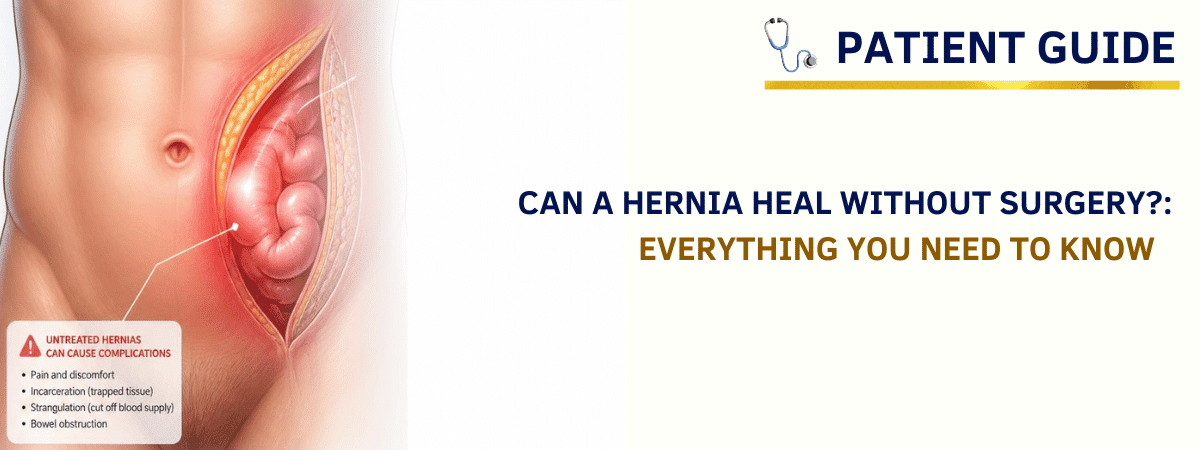
What Happens If a Hernia Is Left Untreated?
Many patients ignore their symptoms because the swelling appears small or the discomfort seems manageable. However, delaying treatment can sometimes allow the condition to worsen.
Not every hernia becomes dangerous immediately, but some hernias gradually enlarge and may eventually lead to complications.
Possible problems include:
- Increasing pain and discomfort
- Enlargement of the hernia
- Difficulty performing daily activities
- Reduced blood supply to affected tissues
- Intestinal obstruction
- Strangulation of the hernia
The risk varies depending on the type, size, and location of the hernia.
What Is an Incarcerated Hernia?
An incarcerated hernia occurs when the protruding tissue becomes trapped and cannot move back into its normal position.
Common symptoms include:
- Persistent pain
- Abdominal swelling
- Nausea
- Vomiting
- Constipation
- Tenderness around the affected area
Without prompt treatment, the condition may become more serious.
What Is a Strangulated Hernia?
A strangulated hernia develops when the blood supply to the trapped tissue is reduced or completely blocked.
This condition is considered a medical emergency.
Warning signs include:
- Severe abdominal pain
- Fever
- Nausea and vomiting
- Redness or dark discoloration of the skin
- Increased swelling
- Abdominal bloating
Patients experiencing these symptoms should seek immediate medical attention.
You can also read our article on emergency abdominal conditions:
Emergency Abdominal Pain: 10 Warning Signs You Should Never Ignore
Are There Any Non-Surgical Treatments for a Hernia?
Although surgery remains the most definitive treatment for many hernias, certain measures may help relieve symptoms and slow the progression of the condition.
These methods may include:
- Avoiding heavy lifting
- Maintaining a healthy body weight
- Eating a fibre-rich diet
- Managing constipation
- Treating chronic cough
- Quitting smoking
- Performing doctor-approved physical activities
These measures may reduce discomfort but generally do not close the opening in the abdominal wall.
Can Exercise Cure a Hernia?
This is one of the most frequently searched questions online.
The simple answer is no.
Exercise may strengthen surrounding muscles and improve overall health, but it does not repair the damaged tissue responsible for the hernia.
In some situations, intense exercise may even worsen symptoms.
Activities that may increase abdominal pressure include:
- Heavy weightlifting
- High-intensity workouts
- Sit-ups
- Sudden twisting movements
- Improper lifting techniques
Before beginning an exercise programme, it is advisable to seek medical guidance.
Can a Hernia Belt Cure the Problem?
Hernia belts, binders, and support garments are sometimes used to provide temporary relief.
They may help:
- Reduce discomfort
- Support weakened muscles
- Minimise pressure
- Improve mobility
However, these devices do not repair the underlying defect.
Long-term use without proper medical supervision may delay appropriate treatment.
When Is Hernia Surgery Necessary?
Surgery may be recommended when:
- Pain becomes persistent.
- Daily activities are affected.
- The hernia continues to increase in size.
- The intestine becomes trapped.
- Blood supply is compromised.
- Complications develop.
The timing of surgery depends on each patient’s condition.
Dr. Vijay Shivpuje carefully evaluates every patient before recommending the most suitable treatment plan.
Learn more here:
What Are the Different Types of Hernia Surgery?
Treatment options generally include either open surgery or laparoscopic surgery.
Open Hernia Surgery
In open surgery, the surgeon makes an incision to access and repair the weakened area.
This approach may be recommended in selected cases, including complex hernias.
Potential advantages include:
- Excellent visibility
- Effective repair of larger defects
- Suitable for selected emergency cases
Laparoscopic Hernia Surgery
Laparoscopic surgery is performed using smaller incisions and specialised instruments.
Potential benefits include:
- Smaller scars
- Reduced postoperative discomfort
- Faster recovery
- Earlier return to daily activities
- Shorter hospital stay in appropriate cases
You can learn more here:
Advanced Laparoscopic Hernia Repair in Solapur
Laparoscopic Versus Open Surgery
| Feature | Open Surgery | Laparoscopic Surgery |
| Incision size | Larger | Smaller |
| Recovery period | Longer | Shorter |
| Hospital stay | May be longer | Often shorter |
| Postoperative discomfort | Variable | Often reduced |
| Return to work | Slower | Faster |
The most appropriate approach depends on:
- Hernia size
- Previous surgeries
- Overall health
- Presence of complications
- Individual patient needs
Recovery After Hernia Surgery
Recovery varies from person to person.
Many factors influence healing, including:
- Age
- General health
- Type of surgery
- Lifestyle factors
- Presence of underlying illnesses
During the First Few Days
Patients are usually advised to:
- Walk regularly.
- Stay hydrated.
- Avoid strenuous activity.
- Follow medication instructions carefully.
- Attend scheduled follow-up appointments.
During the Following Weeks
Patients should gradually return to their routine activities according to their surgeon’s advice.
Recommendations often include:
- Avoiding heavy lifting
- Maintaining healthy eating habits
- Controlling body weight
- Preventing constipation
How Can You Reduce the Risk of Developing a Hernia?
Although not every hernia can be prevented, healthy lifestyle choices may reduce the risk.
Helpful measures include:
- Maintaining a healthy weight
- Stopping smoking
- Exercising regularly
- Avoiding excessive straining
- Treating chronic cough
- Eating a balanced diet
- Using proper lifting techniques
When Should You Consult Dr. Vijay Shivpuje?
Consult a specialist if you experience:
- Persistent swelling
- Groin pain
- Increasing abdominal discomfort
- Nausea and vomiting
- Fever
- Constipation
- A visible lump that becomes larger over time
Early diagnosis can help reduce the risk of complications and enable timely treatment.
If you are experiencing hernia symptoms or would like expert advice regarding hernia surgery in Solapur, you can schedule a consultation with Dr. Vijay Shivpuje, Consultant Surgeon and Chief of Surgical Services at Yashodhara Super Speciality Hospital, Solapur.
📞 Phone: +91 94220 69801
📍 Book an appointment: Book Now
Conclusion
If you have ever wondered, “Can a hernia heal without surgery?”, the answer is usually straightforward. Most hernias do not disappear on their own because the weakness in the abdominal wall remains. Although lifestyle modifications may help relieve symptoms, they generally do not provide a permanent solution.
Recognising hernia symptoms early is essential because timely treatment can help reduce discomfort, prevent complications, and improve overall quality of life. Advances in modern surgical techniques, including minimally invasive procedures, have also improved recovery for many patients.
Every patient is different, and the best treatment approach depends on several factors, including the type of hernia, the severity of symptoms, and overall health status.
If you are experiencing symptoms or would like expert advice regarding hernia surgery in Solapur, consult Dr. Vijay Shivpuje, Consultant Surgeon and Chief of Surgical Services at Yashodhara Super Speciality Hospital, Solapur.
Book an appointment: Book Now
FAQs
1. Can a hernia heal without surgery?
Ans: In most cases, the answer is no. A hernia usually does not heal on its own because the weakened muscles or tissues cannot naturally close the opening. Lifestyle changes may reduce discomfort, but they generally do not repair the defect.
2. What are the early hernia symptoms?
Ans: Early hernia symptoms may include:
● A visible lump or swelling
● A feeling of pressure or heaviness
● Pain while coughing or lifting objects
● Burning or aching sensations
● Groin discomfort
● Abdominal pain
Symptoms vary depending on the type and location of the hernia.
3. Can exercise cure a hernia?
Ans: No. Exercise can strengthen surrounding muscles and improve overall fitness, but it does not repair the weakened tissue responsible for the hernia. In some cases, strenuous activity may worsen the condition.
4. Can a hernia become an emergency?
Ans: Yes. Certain complications, such as incarceration or strangulation, require immediate medical attention.
Seek urgent care if you notice:
● Severe pain
● Persistent vomiting
● Fever
● Abdominal swelling
● Skin discoloration
● Inability to pass stool
5. What happens if a hernia is left untreated?
Ans: An untreated hernia may:
● Increase in size
● Cause increasing discomfort
● Restrict blood supply
● Lead to intestinal obstruction
● Require emergency surgery
Early evaluation is recommended.
